
The First Hello (a.k.a. “Do You See Me or Should I Just Turn Around?”)
I’ve been in customer service pretty much my whole life. I started volunteering at a Red Cross location when I was 14, and the principles I learned there followed me into every job I had after that.
Over the years, I’ve realized something: customer service is a lot like blind dating.
That’s the power of a first impression. And here’s the wild part: your brain is doing this faster than you think.
Someone walks through the door with very little information. They don’t know you. They don’t know the vibe.
Studies suggest it only takes a few seconds—somewhere in the 3-to-7 second range—for someone to decide whether they feel comfortable, whether they trust you, and whether they want to stick around…
Or whether they’re already mentally looking for the nearest exit like, “Welp, this was nice!”
That’s why, just like on a blind date, the most important moment happens before you even speak. Call it a vibe check, if you will.
Here are three simple, timeless ways to make sure you pass it.
1. Make eye contact and greet them with a smile
This sounds obvious, but it’s wildly underestimated.
When someone walks into a business—especially for the first time—they’re unconsciously asking:

A genuine smile answers all three instantly.
An authentic, warm smile tells people they’re not invisible and that their presence matters. It sets the tone for the entire customer experience, not just that moment.
Even when I’m not in the best mood—or I’m busy helping someone else—I make a point to take a breath, relax my shoulders, and offer a sincere smile. That small acknowledgment goes a long way. It says, “I see you, and I’ll be right with you.”
And that’s often all someone needs to feel at ease.
2. Say “hello” and make a physical gesture
When I say “physical gesture,” I don’t necessarily mean a handshake.
Some people won’t want one. Maybe they’re not feeling well, maybe they’re a germaphobe, or maybe they just don’t like touching strangers. Instead, think welcoming, not presumptive.
Reach out your hand or sweep it open to guide them toward a chair, table, or counter. It’s an invitation—an embrace without the embrace.
That kind of gesture communicates:

In customer service, presence matters. And in a world full of distractions, being fully present is surprisingly memorable.
3. Use their name (and make sure you say it right)
Names matter. A lot.
If you’re not sure how to pronounce someone’s name, ask. Most people appreciate the effort more than a confident-but-wrong guess.
I have a friend whose name has a lot of letters in it. I practiced saying it correctly so I could use it naturally. Her face lights up every time—because her name is part of who she is. Using it shows that she matters and that I’m paying attention.
Your customers feel the same way.
Using someone’s name—and saying it correctly—turns an interaction from transactional into personal. It tells them they’re more than just the next person in line.
What this means for service providers
If you work in customer service, retail, hospitality, healthcare, salons, or any service-based business, this is your blind date moment.
Your walk-ins didn’t swipe right on you ahead of time. They’re meeting you cold. And whether they come back often has less to do with pricing or policies—and more to do with how you made them feel in the first 30 seconds.
These three behaviors:
- eye contact and a smile
- a welcoming gesture
- using someone’s name
They’re not fancy. They’re not trendy. And they don’t require new software or training programs.
But they build trust fast.
These things can feel like silly, no-brainer details—especially when you’re busy or stressed. And that’s exactly when they’re easiest to forget.
I’ve been in customer service for eleventy-something years, and almost everything else has changed. Technology. Tools. Expectations.
But not these.
Because at the end of the day, customer service—like dating—is about connection. And connection will always be needed. Always be wanted. And always be appreciated.
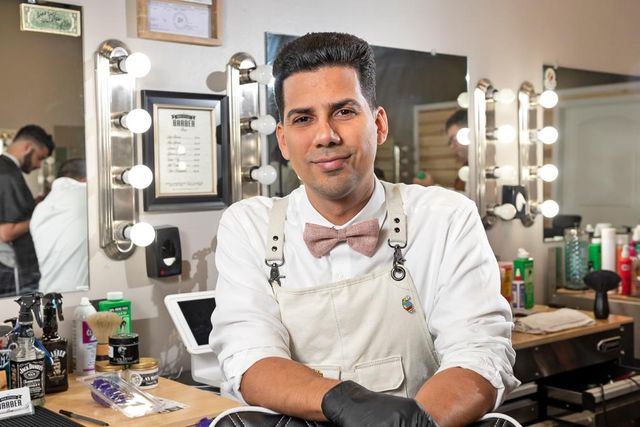
So the next time someone walks through your door, treat it like a first date.
Smile. Be present. Learn their name.
You never know—it might be the start of a beautiful long-term relationship. 
In the next post, we’ll talk about how the space itself plays a role in that first-date feeling — before a single word is spoken.
Want walk-ins to feel welcomed before they even walk in the door? That’s the problem EnRoute is built to solve. Learn more about EnRoute.
Hospitality Starts Here
Our Team is helping service providers everywhere - from restaurants to barbershops - start 2026 on the right foot.
Check out how we can get more customers reliably through your door with no risk and no contract!
Request a Demo now to see it in action!