
The First Hello
(a.k.a. “Do You See Me or Should I Try Somewhere Else?”)
I've been in customer service pretty much my whole life. I started volunteering at a Red Cross location when I was 14, and the principles I learned there followed me into every job I had after that.
Over the years, I've realized something: customer service is a lot like blind dating. You get one shot to make someone feel like showing up was worth it.
And here's the wild part: subconsciously, they decide that in seconds, before you've had a chance to say much of anything. Studies suggest it only takes a few seconds, somewhere in the 3-to-7 second range, for someone to decide whether they feel comfortable, whether they trust you, and whether they want to stick around…
Or whether they're already mentally looking for the nearest exit like, "Nope, I'm out!"
That's why, just like on a blind date, the most important moment happens before you even speak. It's called a vibe check for a reason, and here are three simple, timeless ways to make sure you pass it.
1. Make eye contact and greet them with a smile
This sounds obvious, but it’s wildly underestimated.
When someone walks into a business for the first time, they're unconsciously getting a gut-check of the vibe:
- Do you see me?
- Am I welcome here?
- Am I interrupting something?
- Am I safe:
- Should I slowly back away so as not to startle the local wildlife?

A genuine smile answers most of those instantly. The last one, though, needs its own blog post to address...
But back to that smile. An authentic, warm smile can be the single most important thing you can do, even if you're busy with another customer. It tells people they're not invisible and that you welcome their presence. It sets the tone for the entire customer experience, not just that moment.
Even when I'm not in the best mood, or I'm busy helping someone else, I make a point to take a breath, relax my shoulders, and offer a sincere smile. That small acknowledgment goes a long way. It says, "I see you, and I'll be right with you." And that's often all someone needs to feel at ease.
After all, when you meet a blind date for the first time and they don't look at you, offer a smile, or acknowledge you in any way, you're probably gonna slip out without a word, and later hear about how you ghosted the date from whoever set you up in the first place. "In my defense, they didn't seem interested in my arrival, so I left and spent the night with my dog, Bubba, who is obsessed with me."
Wouldn't you rather be the blind date that they rush home to call their friend and thank profusely for setting them up with such a good-looking, brilliant, charming individual?
2. Say “hello” and bow
Ok, not really. Unless it's the King of England, then yes, absolutely bow. But you should make a welcoming gesture as you greet them.
How many times have you heard the blind date meet-cute where one person goes for a handshake and the other goes for a hug? Then it's an awkward dance where neither person can figure out who should lead until they both just have to laugh and blame it on first date jitterbugging with two left feet.

As the service provider, there is an expectation that you are the lead, and that lead starts with this first interaction. A hello and a handshake, in most cases, is the safest choice, but you could also opt for the sweeping-your-arm-forward in a "come on back" kind of way. Take your cues from the person standing in the door, though, because not everyone likes to shake hands (especially in our post-Covid world).
Do they look warm and relaxed? Then a handshake will probably work. But if they look a little uncomfortable, or their vibe is standoffish, a gesture for them to join you on the floor is a better option. It shows that you're ready to guide them, at their pace. That kind of gesture calmly communicates:
- You have my full attention
- You belong here
- I'm ready to help
- Would you like to dance?
Putting people at ease has a lot to do with body language. Presenting a welcoming, warm, relaxed image invites people to mimic your body language, which directly affects how they feel. And as everyone who's ever been on a date knows, relaxed dates are often the best dates.
3. Use their name (and make sure you say it right)
Names matter. A lot. If you're not sure how to pronounce someone's name, ask. Most people appreciate the effort more than a confident-but-wrong guess.
When you address a customer by name, it catches their attention. It might take two or more "Excuse me, sir" or "Ma'am" before someone realizes you're talking to them, but say their name? They'll look up almost immediately. People like hearing their name said by someone else.
I have a friend whose name has a lot of letters in it (like twelve). I practiced saying it because she's Haitian, and her name doesn't just roll off the tongue for me. Her face lights up every time someone outside of her family says it because her name is a big part of who she is. Using it shows that she matters to me, I respect her individuality, and that I want her to feel included.
Your customers feel the same way.
Using someone's name (and saying it correctly) turns an interaction from transactional into personal. It tells them they're more than just the next person in line, and it makes them remember you in a positive light. And isn't that what we all want from a date?
What this means for service providers
If you work in customer service, retail, hospitality, healthcare, salons, or any service-based business, this is your blind date moment.
Your walk-ins may have heard about you from a friend or may have just seen your sign as they were driving by. Either way, they're meeting you cold. Whether they come back often has less to do with pricing or policies, and more to do with how you made them feel in the first 30 seconds.
These three behaviors:
- eye contact and a smile
- a welcoming gesture
- using someone's name
They're not fancy. They're not trendy. And they don't require new software or training programs.
But they build trust fast.
These things can feel like silly, no-brainer details, especially when you're busy or stressed. And that's exactly when they're easiest to forget.
I've been in customer service for eleventy-something years, and almost everything else has changed. Technology. Tools. Expectations.
But not these.
Because at the end of the day, customer service—like dating—is about connection. And connection will always be needed. Always be wanted. And always be appreciated.
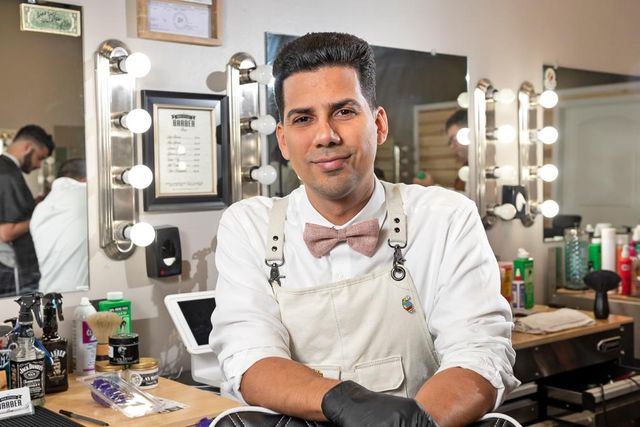
So the next time someone walks through your door, treat them like it's your first date.
Smile. Be present. Learn their name.
You never know, It might be the start of a beautiful long-term relationship. 
In the next post, we’ll talk about how the space itself plays a role in that first-date feeling — before a single word is spoken.
Want walk-ins to feel welcomed before they even walk in the door? That’s the problem EnRoute is built to solve. Learn more about EnRoute.
Hospitality Starts Here
Our Team is helping service providers everywhere - from restaurants to barbershops - start 2026 on the right foot.
Check out how we can get more customers reliably through your door with no risk and no contract!
Request a Demo now to see it in action!